A Buffalo AirwaysLockheed Electra had a gear up landing in Yellowknife, NWT on March 5, 2012. The 1959 Lockheed 188A C-FBAQ was on a flight to CYZF, from Goose Lake, NT when the crew reported the right main gear did not fully retract. Several unsuccessful attempts were made to manually retract the gear over about an hour. Following that, an emergency was declared, and the plane landed runway 34 with the left and nose gear extended. When the right side of the plane dropped, it departed the runway and came to rest in the airport infield.
Transport Canada CADORS reports that a small engine fire was extinguished when the plane came to rest in the snow-covered infield. Damage was substantial. The plane was lifted by crane, and the right gear exended and locked when the gear door was pulled away. The incident closed the runway for a number of hours.
Buffalo Airways owner Joe McBryan told Yellowknife media that the flight crew made a "textbook" emergency landing.
You can see the whole story on the popluar History Channel reality show Ice Pilots NWT.
The Canadian Transportation Safety Board released a progress report (Jan 5/12) on their investigation into the crash of First Air Boeing 737-200 C-GNWN at Resolute Bay, Nunavut on August 20, 2011. CBC News story here. On April 5, 2013, the TSB told CBC News that they have a draft final report on the crash prepared, but that it will be some time before the final report is complete and released. The final report was released on March 25, 2014. More detail on the report and links are available here.
The plane crashed on approach to CYFB, the Resolute Bay airport. Fifiteen people were aboard, including a crew of 4. Twelve died in the crash, including all of the First Air crew members. Three passengers were medevaced to hospital in Iqaluit, Nunavut, from which they were sent on for further treatment to Ottawa, with non-life threatening injuries. Members of the Canadian Forces who were in Resolute for Operation Nanook, along with local volunteer firefighters, were involved in the rescue of the survivors.
A number of the those who died in the crash were employees of Aziz Kerhaj, owner of the South Camp Inn in Resolute. Aziz and his wife also lost a granddaughter in crash.
Pilots and airlines in Yellowknife, where the flight originated, held a memorial fly-by a few days after the accident. The video is here. You'll see Buffalo Airways DC-3, DC-4, C-46; a Dehavilland Buffalo, Twin Otters, DASH 7 and 8, Beech 18, Dornier 228, and others. The fly-by finishes with a Canadian North B737.
It is pretty rare to find a Cessna 172 in Canada's high arctic. But that didn't put Werner Koch off. He flew his 1968 172I C-GEGG to Grise Fiord, Nunavut in July of 2011. See Grise Fiord by 172 in our Trip Reports and Visits section. Here's his photo of the terminal building at the Grise Fiord Airport. That's something very, very few people have actually seen! Grise Fiord is Canada's northern-most permanent settlement, at the south end of Ellesmere Island.
The 1992 Cessna 208B Caravan, C-GATV, was on a scheduled flight which left Yellowknife at 11:00 MT and was scheduled to arrive at 11:45 MT (October 4, 2011). It crashed about 25 nm from Lutselk'e. The initial CBC News story, updated, is here. Aviation weather information for the Lutselk'e area at the time was collected by this site.
Air Canada Jazz announced recently that it is discontinuing service on its Montreal-Ottawa-Iqaluit route. The cancellation takes effect August 1, 2011.
Iqaluit is currently served by two northern airlines on the Montreal-Ottawa-Iqaluit route. First Air and Canadian North are both Inuit-owned airlines, who also serve most Nunavut communities. For more information on these and other carriers, visit our Airlines, Charters and FBOs pages.
According to this Reuters news article, the original plan included a support plane landing at the pole on skis to scout out a smooth ice surface for Cairns to put down his Baron. Plans changed when the support plane wasn't able to make the trip. Cairns headed for the Russian ice research station Barneo instead. The Barneo ice station blog site has photos and video of Cairns' arrival there. There are also some great videos of other planes landing there.
The 747-8F freighter stopped by Iqaluit on March 14, 2011 for an overnight cold weather test.
Chris Harbord got some great video of the runway 34 takeoff on a nice sunny, -27 degree celcius afternoon, March 15th.
The Iqaluit airport attracts cold weather testing from a variety of aviation companies. These tests have brought some interesting aircraft to our town, including the Airbus A380, Eurocopter and more.
Television shows about general aviation, or aviation in general, are few and far between. The Aviators seems to be doing well, now into their third season. re's a new one that made its debut last season fall. They're running on a number of networks, including PBS in the United States, and they have episodes of the program available for sale on their site. You can also join their site, and get on-line access to episodes from the first seasons The website features previews of some of the programs, story lists, trailers and photos. Some areas require paid membership.
Lost in the fire were a King Air 100, a Beech 99 and a Twin Otter. All three aircraft were well-known for long service across the north.
The loss cuts the Aklak Air fleet in half. However, Aklak is jointly owned by the Inuvialuit Development Corporation and Kenn Borek Air, which should mean it will have access to Borek's larger fleet of aircraft to maintain Aklak's scheduled and charter operations. The Aklak medevac (medical transport) aircraft was not damaged. It was being stored in a different hangar at the time of the fire.
The Inuvialuit Development Corporation, which owns Aklak, announced in September, 2011 that Aklak plans to begin construction of a new hangar in the spring of 2012.
NavCanada is discontinuing production of World Aeronautical Charts for Canada. They are also withdrawing the existing inventory, effective September 23, 2010. After September 23, 2010, WAC charts are no longer authorized for operational use.
Here's the text of NavCanada Aeronautical Information Circular 17/10, which contains the details. We've added links to the NavCanada site for convenience:
The spring of 2010 brought big changes for our little Polar Pilots group. For a variety of reasons, we sold our Cessna 172 C-GOLJ and hangar at the Iqaluit, Nunavut airport. While that means we won't be flying locally for the forseeable future, we remain actively interested in general aviation in Nunavut. And while we're no longer able to provide tie-down space for visiting small planes, we will continue to endeavour to answer questions and provide information for pilots travelling to our unique region.
We'll also continue to actively maintain the Polar Pilots web site.
Over the last 17 years we've met a wide range of pilots from all over the world. And we hope to hear from you, if you're planning a trip up this way.
Check out our Trip Reports and Visits pages for some new additions. We have links to a trip report from Washington State, USA to Europe by Gary and Alice Nelson; the blog from another Cessna 182 trip from Vancouver, BC to Europe, and a link to blog of an ultralight pilot who took is Challenger from Montreal to the Arctic Coast community of Kugluktuk.
Have you made an arctic trip in a small plane? Send us your story!
We had a couple of hundred kids (and quite a few adults, too!) visit OLJ during the show. As you can see from the photo above, the chance to get behind the controls of even a small airplane was irresistible to many. As one child was heard to say, while pointing across the tarmac at OLJ, "Mom, I want to go and see the kids' plane!".
Airport information, along with photos and tourism info have been added to the articles under COMMUNITIES/KIMMIRUT. The photo at left shows approaching Kimmirut from the east (from Iqaluit).
The airstrip is the horizontal line in the centre of the frame. Click on the photo to enlarge.
Ice Pilots NWT has had three successful seasons on Canada's History Television channel. And fans are looking forwardto season 4 this fall. The reality series tells the story of Buffalo Airways, an airline based in the Northwest Territories. Buffalo is renowned for its fleet of classic rotary engine planes, and for their ability to deliver the goods to many small communities in northern Canada. Video of full episodes of the show is available on-line at the History Television website.
Iqaluit resident Ron Wassink managed to catch the crew of Buffalo's Curtiss-Wright C46a C-GTXW when they were in Iqaluit in March, 2011. They ended up here for a couple of days due to weather, while trying to deliver a generator to Qikiqtarjuaq. Ron's blog features some great photos and information about Iqaluit. Photo used by permission.
The Canadian Transportation Safety Board reports that the landing collapsed the right main gear. The cargo flight landed around 23:30 UTC (18:30ET) that evening. The two pilots were the only people on board, and the TSB says they were not injured.
The plane came to rest just off the 1900 foot runway, near the midpoint. Poor weather conditions on December 7th prevented moving the plane. That caused the closure of the airport all day on December 7th. The plane was finally moved late in the afternoon on December 8th, after which the airport was opened.
An Arctic Sunwest Charters Twin Otter float plane crashed in the "Old Town" area of Yellowknife, Northwest Territories shortly after 1pm Mountain time on September 22, 2011. The plane was apparently on a landing approach to the ASW float base at the time. Reports indicate the plane clipped a power line, crashing between two buildings. There were 9 people on board. Pilots Trevor Jonasson, 36, and co-pilot Nicole Stacey, 26, died in the crash. Six survivors were taken to hospital in Yellowknife. Another was transferred to hospital in Edmonton.
The plane was a 1973 deHavilland DHC-6-300 Twin Otter C-GARW, registered to Arctic Sunwest.
The Iqaluit International Airshow is back this year, and promises to be a fun afternoon for local aviation fans. It takes place on Saturday, August 13, 2011 at the north apron of the Iqaluit airport (CYFB), from 10am to 3pm.
The show provides a chance for people in Iqaluit to see up close a number of working aircraft that currently call Iqaluit home.
Europe seems be the theme for June 2011. One of the more usual planes to drop by Iqaluit in awhile made an appearance on June 12, 2011. Couldn't help but notice the bright red Polish-built EADS 'Warszawa - Okecie' S.A. PZL-104MA Wilga 2000 on approach to runway 34.
And we recently learned the story of a transatlantic trip made from Europe through Frobisher Bay back in 1968. In a motorglider with a 36 hp Volkswagen engine no less. Check out our story and links on Mira Slovak in our Trip Reports and Visits section. He's certainly had some exceptional flying adventures.
Kivalliq Air (also known as Keewatin Air) has opened a new hangar at the Iqaluit, Nunavut airport CYFB on April 7, 2011. Kivalliq Air provides scheduled air service and air ambulance in the Kivalliq region of Nunavut, out of Rankin Inlet and Winnipeg. And with their new facility in Iqaluit, they're moving into the air ambulance/medivac business in the Baffin Region.
A 1971 Aero Commander was forced to make an emergency landing shortly after take-off from Rankin Inlet, Nunavut on July 18, 2010.
After both engines quit, the pilot attempted to return to the airport, but had to settle for a forced landing on the tundra a short distance from the runway.
The Canadian Transportation Safety Board published the report on the incident recently. The report cites fuel contamination as the cause of the engine failures. It appears that one of two drums pumped into the plane was from a 'slop' drum, containing waste jet fuel among other things. It is a good lesson in making SURE you've got good fuel. Here's the CBC story on the report.A copy of the full TSB report is available here.
Saturday, May 19, 2012 is International Learn to Fly Day. It is a day to encourage everyone who's ever thought they might like to learn to get out and give it a try. Visit the site here for information about how to hold an event, or participate in one. And don't worry if you log in too late for this year's event. You can always get a head start on next year's!
Paul Bossens, and Pete Koekelkoren flew a Robinson R-44 Clipper II (OO-HEY) from Brussels, Belgium to 2010 Oshkosh for the airshow and then on to Los Angeles. The trip covered more than 9,000 nm, flown over about a month in the summer of 2010.
They made it to LA August 8, 2010. This was their second attempt at the transtlantic trip. They started out with the HeliVenture group of helicopters in the summer of 2007 that made the trip to Oshkosh in celebration of the 100th anniversary of helicopter flight in France. Unfortunately, Paul and company had to give up in Iceland due to a technical program. But this year they made it, including a couple of days flying around the Los Angeles area.
We've added a section on the site to display some of the photos we've taken and collected of different aircraft here at CYFB in Iqaluit, Nunavut. We've collected quite a few in the last few years, and will be adding them as we have time over the next few weeks.
Alert is a restricted military site, so just getting permission to go there takes a lot of work. And then there's the flight to the top of Ellesmere Island, some 4000 kilometers north of their home near Toronto, Ontario. Making that trip is not something or the faint of heart.
There is only one small civilian community on Ellesmere - Grise Fiord, about 700 kilometers south of Alert. And there's a weather station about halfway up at Eureka. There also used to be a science station at Eureka, but that was closed in 2012.
It's here! That simple paper pilot license you've carried around for years is being replaced. Transport Canada has made significant changes to the document, adding more details, including pilot photograph, ratings, machine-readable bar codes and a number of security features.
Most classes of current Canadian commercial and private aeroplane and helicopter pilots and ATP holders should have applied for the new document by now. The deadline for applications was June 30, 2010. If you haven't obtained your new pilot document yet, you can't fly until you get it. Transport Canada says applications are taking 4 to 6 weeks to process.
Glider Pilot, Balloon Pilot, Gyroplane pilot permit, recreational and ultra-light licence holders can also apply now for the new document. Those categories of existing licences will expire on December 31, 2010.
We've added a new pages and information for the community of Pangnirtung. Click on the link under communities for more about the airport, community, accommodation, and tourism info.

 Trip Reports and Visits


 Aklak Air


 The Iqaluit International Airshow is back this year, and promises to be a fun afternoon for local aviation fans. It takes place on Saturday, August 13, 2011 at the north apron of the Iqaluit airport (CYFB), from 10am to 3pm.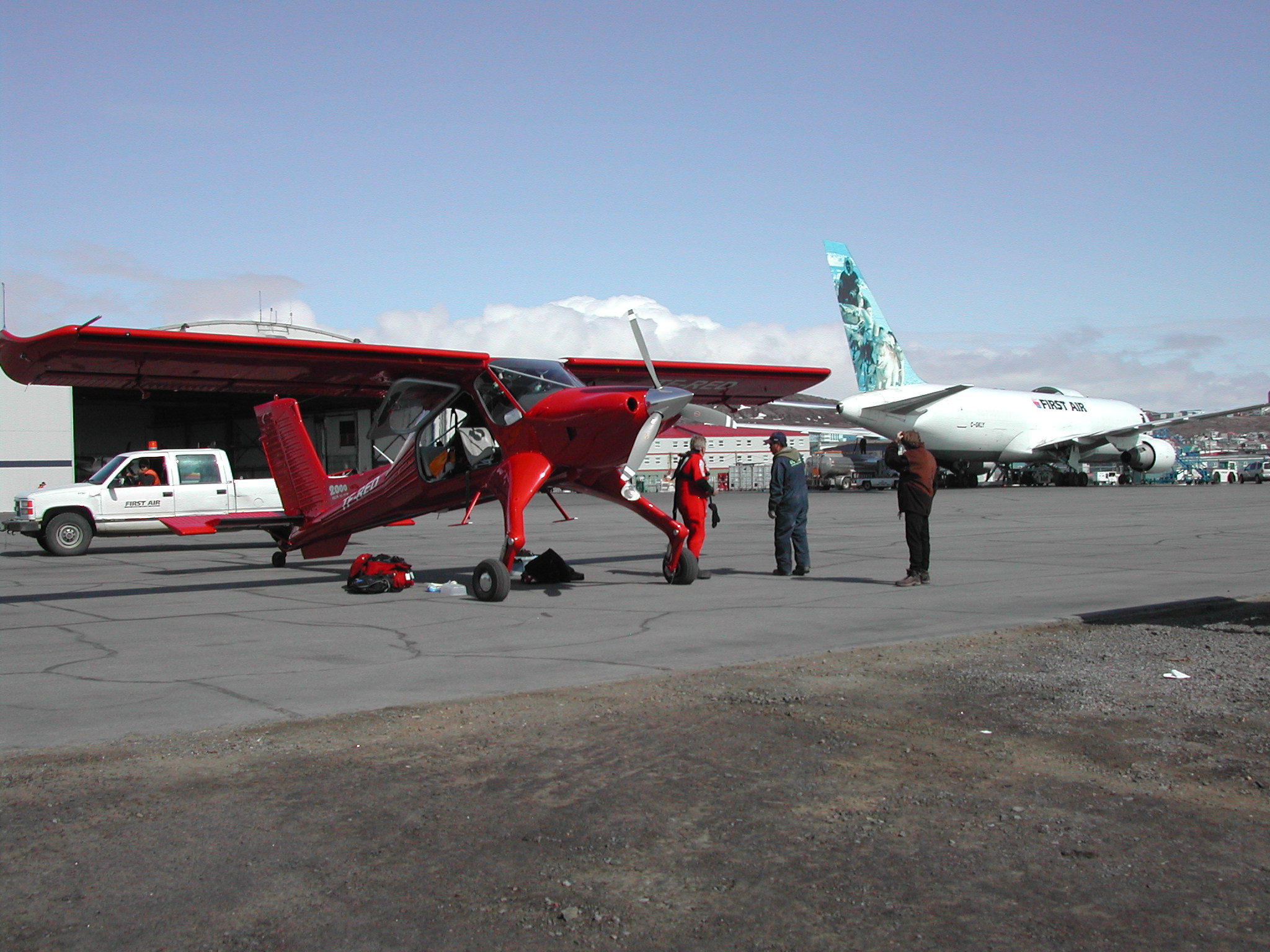

 A 1971 Aero Commander was forced to make an emergency landing shortly after take-off from

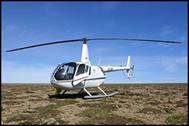 Paul Bossens, and Pete Koekelkoren flew a Robinson R-44 Clipper II (OO-HEY) from Brussels, Belgium to

 It's here! That simple paper pilot license you've carried around for years is being replaced. Transport Canada has made significant changes to the document, adding more details, including pilot photograph, ratings, machine-readable bar codes and a number of security features.


